Starting point: a changing institution with an outdated digital setup
The cultural centre in Gúta adopted a new name and visual identity, calling for a web presence that reflected its renewal. However, the previous website was outdated and no longer met the new expectations in either appearance or functionality.
The reliability of the existing online ticketing system was also a problem. There were instances of the same seat being sold to multiple customers, purchase-related emails failing to arrive, and errors occurring during online payments. These caused difficulties for both audiences and the institution’s staff.
The goal was therefore to create an entirely new website and ticketing system on new technical foundations.
Mapping operations before development
The work was preceded by a thorough assessment. We reviewed the available data and content, identified the texts still to be developed, and agreed on the ticketing requirements.
The planning process had to take into account the tasks of both customers and staff. Audiences needed clear seat selection and a simple purchasing process. The institution’s staff needed an interface that would let them easily manage different events, ticket categories and sales scenarios.
We therefore built the ticketing system around the cultural centre’s operations.
Seating plans, sections and different event types
We created a digital seating plan for the theatre hall in the new system. When adding an event, staff can specify which ticket category each seat belongs to. Multiple categories can also be used to create different sections.
The solution is not limited to a single hall or event type. Additional halls can be created, and tickets can also be sold for events without numbered seats — such as outdoor events.
This allows the institution to manage its different programmes within the same system.
Online and on-site sales with shared records
One of the system’s core principles is that every ticket sale is entered into the same central register.
Alongside online purchases, staff can use a separate manual sales mode for on-site ticket sales. This also records the sale in the online system: no ticket is sold without being included in the shared register.
Online and on-site sales therefore rely on the same ticket and seat data.
The system currently supports online card payments as well as Apple Pay and Google Pay.
QR-code admission with a custom application
The ticketing system is also connected to an admission application we developed.
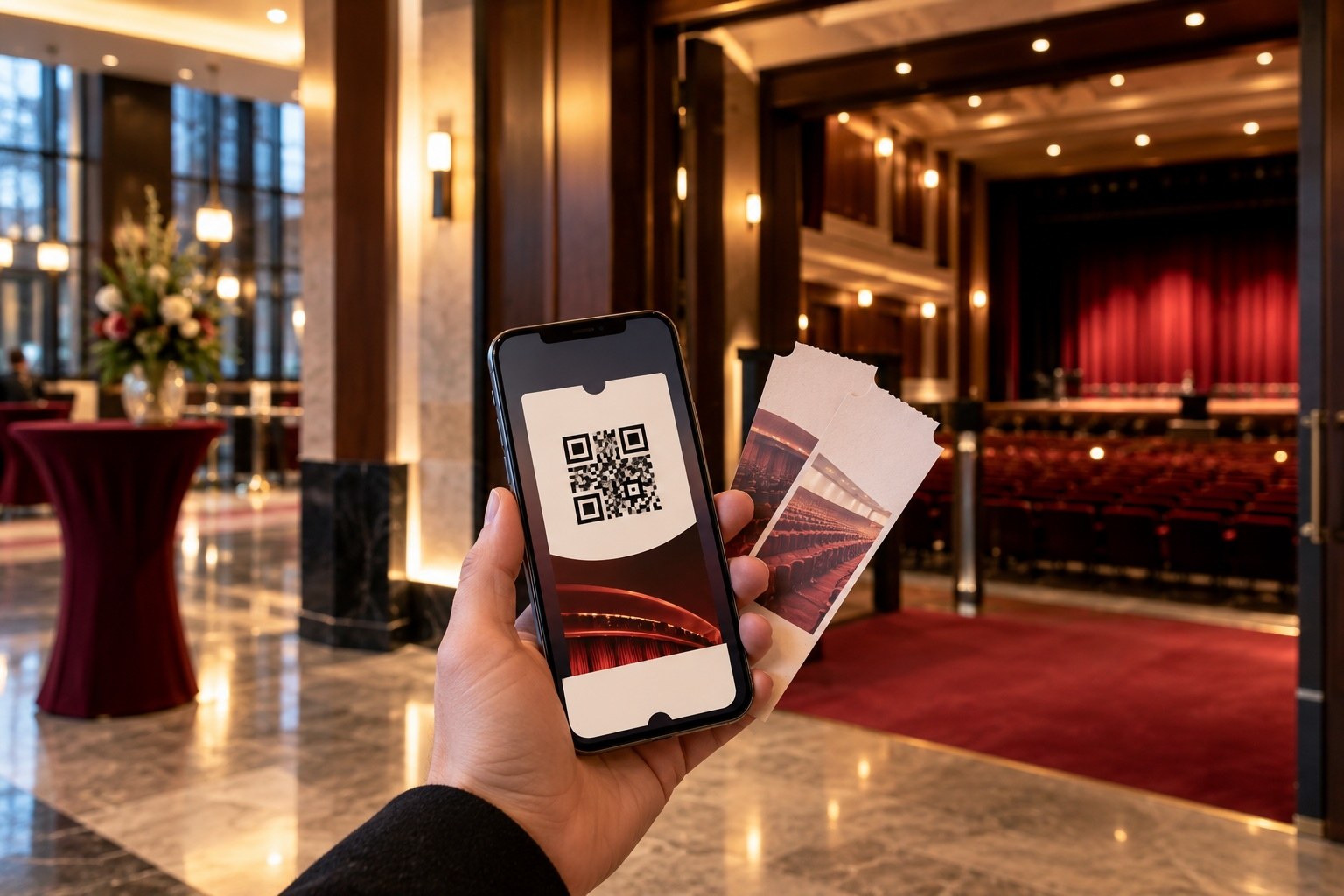
At the event, staff scan the QR code on a printed or digitally presented ticket. The system checks whether the ticket has already been used and then records the admission.
If someone later tries to enter with the same ticket, the system flags its previous use. Admission can therefore be checked not simply by the presence of a ticket, but by its recorded status.
Built on WordPress, with CloudBrain developments
The website and ticketing system run on WordPress. Payment, invoicing and ticket issuance integrations are provided by CloudBrain’s own developments.
The main development challenge was reconciling complex operations with ease of use. Managing different halls, ticket categories, sales methods and admission tasks had to remain straightforward for both customers and the institution’s staff.
Result: a significant share of ticket purchases moved online
We handed over the new website and ticketing system on November 1, 2023.
Based on experience from the first 3–4 months after handover, around 80% of tickets sold were already being purchased online. During this period, ticket sales increased, and audiences purchased their tickets earlier than before.
The cultural centre received a website aligned with its new name and visual identity, along with a system connecting event ticket sales and admission. Audiences can make their purchases online, while staff can manage online and on-site ticket sales in a shared register.